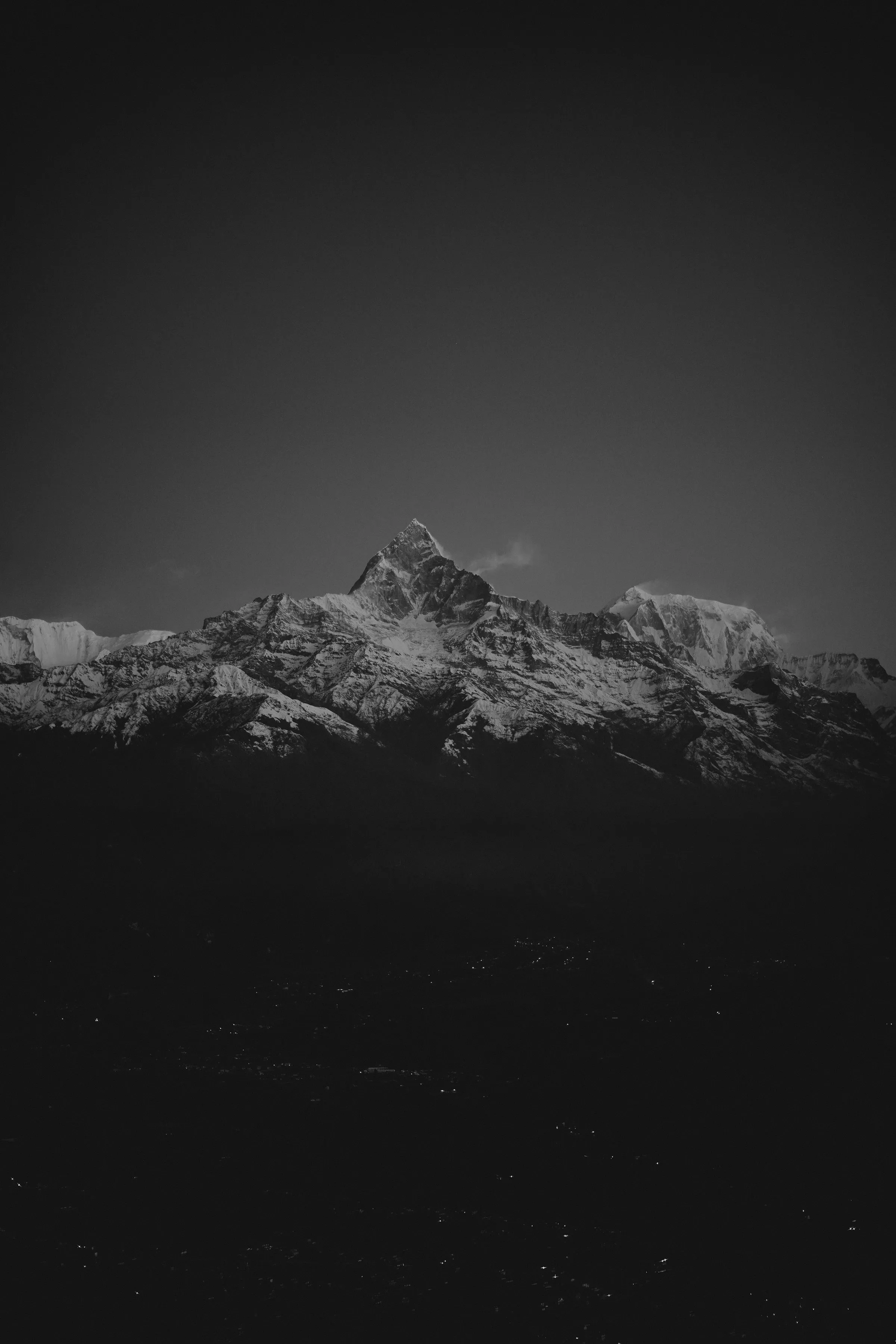
Why does a person look at the highest point on Earth and decide to go stand on it? Nobody's ever answered that well — not even the person credited with the most famous attempt. In 1923, George Mallory was touring the U.S. raising money for an Everest expedition when a reporter asked him why. The answer that made it into print —“Because it's there”— became legend after Mallory disappeared on the mountain the following year. People who knew him doubted he ever said it; it doesn't sound like him, and he wasn't even in the city the article places him in. The most quoted answer to “why Everest” may itself be a media invention. That's a fitting start, because almost everything else about this mountain turns out to be stranger, older, or more contested than the postcard version.
It took 32 years to get there
Hillary and Norgay's 1953 summit gets remembered as a single moment. It was actually the sixth serious expedition in three decades, each one inching higher and paying a real cost:
- 1921
Mallory's own reconnaissance finds the route up the North Col: 7,005 m.
- 1922
George Finch becomes the first person above 8,000 m (8,320 m). An avalanche kills 7 Sherpas on the same expedition.
- 1924
Edward Norton reaches 8,573 m without oxygen — a record that stands for 29 years. Mallory and Irvine vanish attempting the summit, carrying a camera never found.
- 1933
A fully-equipped British expedition tries again. Turned back.
- 1952
Raymond Lambert and Tenzing Norgay reach 8,610 m before storm and frostbite force them down — 238 m short, one year before Norgay's actual summit.
- 1953
Edmund Hillary and Tenzing Norgay reach the true summit and return alive — the first confirmed ascent, 32 years and six expeditions after the first attempt.
The 1924 camera is still out there, theoretically. If it's ever found frozen in the ice and the film survived, it could still be developed — and could prove Mallory and Irvine stood on the summit 29 years before anyone got official credit for it.
The mountain isn't finished
4–5mm
Everest still grows this much every year. The Indian and Eurasian plates are still colliding underneath it.
450M years
The age of the limestone at the summit — ancient seafloor, fossilized marine life included, thrust to the top of the world by the same collision.
A large earthquake has measurably changed the mountain's height before. It is not a fixed object.
What it does to a body
Above 8,000 m — the “death zone” — the human body is not adapting to the altitude. It's dying faster than it can recover, using oxygen faster than it can be replaced. There's no acclimatizing to it, only a countdown.
10–20 lbs
Typical weight loss over a single expedition. Appetite disappears near the summit; the body burns muscle and fat just to keep functioning.
81%
Share of climbers who experience nausea or vomiting — digestion is one of the first systems the body deprioritizes at altitude.
A calendar with one good week
For most of the year the jet stream sits directly on the summit, producing sustained winds of 100–175+ mph. A safe summit push needs wind under roughly 30 mph. The entire climbing season is really just people waiting for a narrow gap: the jet stream pulls off the summit for 10–14 days each spring, and inside that window, often only 2–5 days are actually safe enough to go.
Some people just keep going back
32
Summits by Kami Rita Sherpa as of 2026 — the current record. For him, the death zone is closer to a workplace.
4G → none
Solid signal at the Lukla trailhead; essentially nothing at Base Camp. For most trekkers, the last connected moment is days before they arrive.
Fixed ropes, weather forecasting, satellite phones — none of it has actually answered Mallory's question, real quote or not. People are still going up there for reasons that don't reduce cleanly to athleticism, bragging rights, or a bucket list. Maybe that's the actual story this mountain tells.
Sources
- Why Mount Everest keeps changing its height (National Geographic)
- The Ordovician rocks of Mount Everest (IUGS Geoheritage)
- Radhanath Sikdar (Wikipedia)
- Early Everest expeditions, 1921–1953 (Britannica)
- The lost Everest camera (Fstoppers)
- “Because it's there” — quote origin (This Day in Quotes)
- What happens to your body when you climb Everest (Outside)
- Everest 2026 weather and jet stream windows (Alan Arnette)
- Kami Rita Sherpa, most Everest summits (Guinness World Records)
- Internet access on the Everest Base Camp trek (Mosaic Adventure)
Verified 2026-09-22. Records (summit counts, etc.) change — re-check before reusing.